
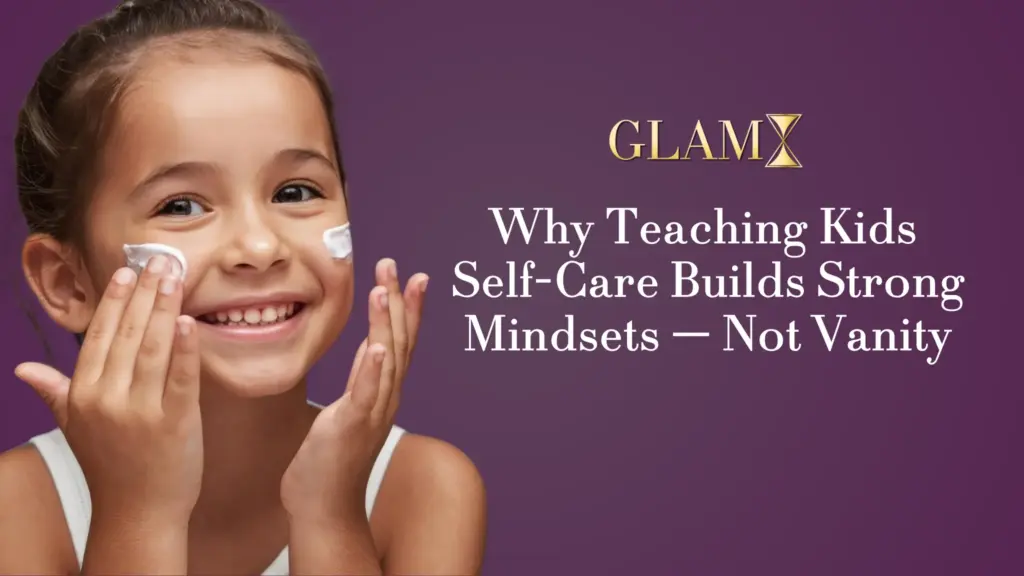
Why Teaching Kids Self-Care Builds Strong Mindsets — Not Vanity
The definition of beauty is evolving.
Once, it meant makeup, perfection, and appearances.
Today, beauty means health, confidence, calmness, and self-respect.
And when we teach children this version of beauty, something powerful happens — they learn to value themselves.
For kids, beauty is not foundation or fancy hairstyles.
It is the simple awareness: “My body matters, and I know how to take care of it.”
Self-Care Builds Self-Worth
When children adopt even basic grooming habits, they’re not just cleaning their bodies —
they’re communicating self-respect to themselves.
Examples:
Washing the face before bed
Keeping skin moisturised
Trimming or cleaning nails
Applying sunscreen outdoors
These tiny actions tell their inner world:
“I matter. My comfort matters. My health matters.”
Child psychology research shows that early hygiene habits promote:
Higher confidence
Healthy boundaries
Responsibility
Discipline
A child practices self-love long before they understand the word.
Routine Creates Discipline — the Good Kind
Consistency is the first teacher of discipline — not through pressure, but through simple, everyday practice.
Small acts like:
Washing hands and legs after play
Brushing teeth twice a day
Bathing regularly with mild cleansers
Brushing hair gently
Applying moisturiser to dry skin
Using mineral sunscreen outdoors
Each habit may feel small, but together, they build:
Trust in routines
Confidence in effort
A sense of responsibility
Kids begin to learn that taking care of themselves is not a chore — it’s their right.
Safety First: The Shift Toward Gentle, Child-Safe Products
Earlier, children’s skincare felt unnecessary — even risky.
Today, with rising concern over harsh ingredients, parents choose:
Mild
pH-balanced
Dermatologist-approved
Chemical-free
Because good self-care for kids isn’t beauty — it’s prevention.
It protects:
Growing skin
Prevents irritation and rashes
Builds lifelong healthy hygiene habits
Self-Care Has No Gender
For generations:
Girls were expected to groom
Boys were expected to stay “rough and tough”
But parenting is changing — beautifully.
Teaching a boy to moisturise after swimming,
or reminding a girl to use sunscreen at football practice —
this is equality in action.
Self-care is not feminine.
Self-care is not masculine.
Self-care is human.
Beauty Starts Early — and It Begins With Awareness
At GlamX, our philosophy is simple:
Care before cosmetics
Safety before style
Confidence before comparison
Every child — boy or girl — deserves:
Gentle routines
Safe products
A nurturing foundation that says,
“You deserve to feel good exactly as you are.”
Self-care is not a luxury.
It is a life skill — and it builds stronger mindsets than any textbook ever could.
Frequently Asked Questions (FAQs)
1) When should kids start learning self-care?
Around age 3 — start with simple habits like brushing teeth and washing hands.
Introduce moisturising and sunscreen gradually as they grow.
2) Isn’t skincare for kids too early?
It’s not about beauty — it’s about protection.
Gentle products prevent dryness, irritation, and sun damage.
3) What kind of products are safe for kids?
Look for products that are:
Mild
Kid-friendly
pH-balanced
Chemical-free
Dermatologist-approved